20,000mAh 22.5W PD Power Bank: iPhone & Samsung
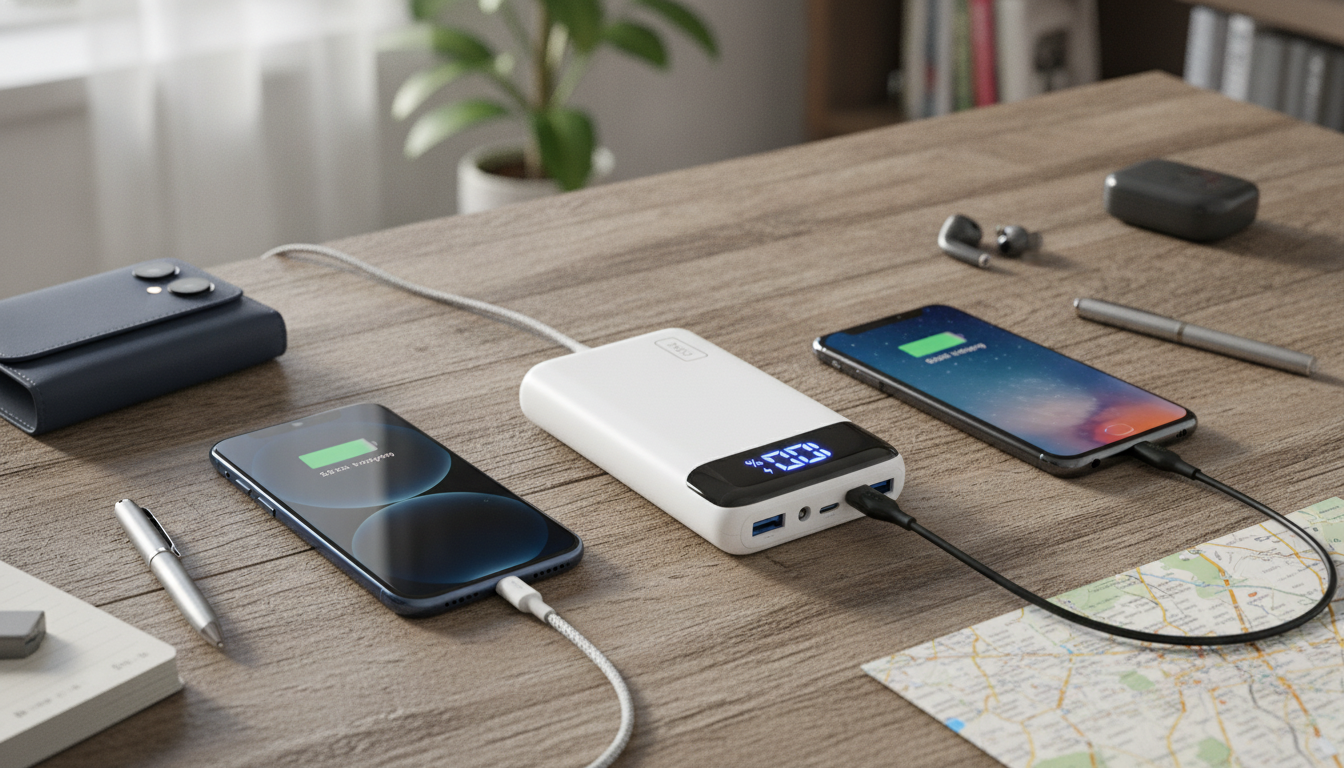
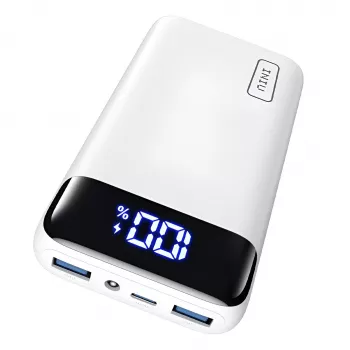
20000mAh Fast Charge Power Bank – 22.5W PD USB-C Portable Charger for iPhone & Samsung
A 20,000mAh power bank with 22.5W USB-C Power Delivery is built for busy days: topping up a phone quickly, keeping accessories running, and reducing outlet-hunting while traveling or commuting. This guide breaks down what the capacity and wattage mean in real use, what to expect for iPhone and Samsung charging, and practical tips for getting the most reliable performance.
What 20,000mAh and 22.5W charging mean day to day
A 20,000mAh power bank sits in the “multi-charge” class—big enough to refill most phones several times before the power bank itself needs to be recharged. That capacity is especially useful when a day includes navigation, video calls, hotspot use, or long stretches away from an outlet.
The “22.5W” rating is about speed. When your phone supports fast charging, the power bank can deliver higher power during the early phase of charging, then naturally taper down as the battery approaches full. This taper is normal and helps manage heat and battery health.
USB-C Power Delivery (PD) is one of the most widely adopted fast-charging standards across modern devices. A PD-capable USB-C port is often the most consistent way to get fast charging on newer phones, tablets, and accessories. For a standards overview, see the USB-IF USB Power Delivery (USB PD) overview.
One important reality check: usable capacity is always lower than the number printed on the label. Energy is lost during voltage conversion and as heat. Planning around roughly 60–75% usable energy is a practical rule of thumb, especially when fast charging or charging while actively using your phone.
Compatibility notes for iPhone and Samsung phones
iPhone fast charging typically works best using USB-C PD with the right cable. For Lightning iPhones, that usually means a USB-C to Lightning cable; for newer USB-C iPhones, USB-C to USB-C is standard. Cable quality matters because a worn or under-rated cable can quietly force slower charging or create intermittent connections. Apple provides guidance in Apple Support: Fast charge iPhone.
Samsung Galaxy phones commonly support fast charging over USB-C. Many models also use Samsung-specific charging profiles, but a strong PD power bank can still deliver excellent performance in everyday use. If a phone, power bank, or cable can’t agree on a higher-power profile, charging will “fall back” to a slower mode. Samsung’s help page, Samsung Support: Fast charging for Galaxy phones, is a helpful reference for settings and expectations.
Real charging speed varies by model and conditions. The highest wattage usually happens at lower battery percentages and drops as the phone fills. Temperature also plays a major role: if the phone is warm (sunlight, gaming, heavy camera use), it may throttle charging to protect the battery.
Estimated recharges: what to expect from 20,000mAh
Recharge counts depend on the phone’s battery size and efficiency losses. Using a conservative 65–70% efficiency provides more realistic expectations—particularly if you’re fast charging, charging multiple devices, or using the phone heavily while it’s plugged in.
Keep in mind that larger phones with higher-refresh displays often consume more power between top-ups, which can reduce the number of “full recharges” you experience over a day or weekend.
| Device battery size (approx.) | Expected full recharges | Notes |
|---|---|---|
| 3,000 mAh phone | 3.5–4.5 | Older/smaller phones; best-case when charging from low to full without heavy use |
| 4,000 mAh phone | 2.5–3.5 | Common mid-to-large phones; mixed use and fast charging reduce totals |
| 5,000 mAh phone | 2.0–2.8 | Large Android flagships; heavy screen time between charges lowers the count |
| Wireless earbuds (small case) | 8–15 | Depends on case capacity; frequent short top-ups are efficient |
Ports, cables, and everyday setup tips
For the fastest and most consistent results, prioritize the USB-C PD port for your primary device. When you need reliable fast charging, the cable is just as important as the power bank—choose a cable rated for fast charging and replace it if it feels loose, disconnects easily, or charges inconsistently.
Charging the power bank: how to refill faster and safer
When this 20,000mAh fast charger is a strong fit
Product snapshot
Model: 20000mAh Fast Charge Power Bank – 22.5W PD USB-C Portable Charger for iPhone & Samsung
Price: $48.97 (USD)
Availability: In stock
Best for: fast top-ups, multi-charge capacity, and USB-C PD compatibility
More in-stock picks to round out a travel/commute kit
- The Midday Energy Crash Mystery – Post-Meal Fatigue Guide, Digestion & Energy Balance eBook
- Stress-Free Pet Adventures – A Complete Pet Travel Guide for Calm, Happy Trips
- EMS Eye Massager with LED Photon Therapy and Heating Vibration for Anti-Aging
FAQ
Will a 22.5W power bank fast charge an iPhone?
Yes, iPhones can fast charge using USB-C Power Delivery with the correct cable (USB-C to Lightning for Lightning models, or USB-C to USB-C for USB-C iPhones). The iPhone will only draw the wattage it supports, and charging speed naturally tapers as the battery fills.
How many times can a 20,000mAh power bank charge a Samsung phone?
For many Samsung phones with 4,000–5,000mAh batteries, a realistic expectation is about 2.0 to 3.5 full charges, depending on efficiency and usage. Heavy screen time, warm temperatures, and using the phone while charging can reduce the total.
Why is my phone charging slowly even with a fast power bank?
Common causes include a cable that doesn’t support fast charging, a charging profile mismatch between the phone and power bank, sharing power across two ports, heat-related throttling, dirty ports, or heavy background activity while charging.










Leave a comment