Safari Hanging Rattle Toy for Stroller & Crib Play
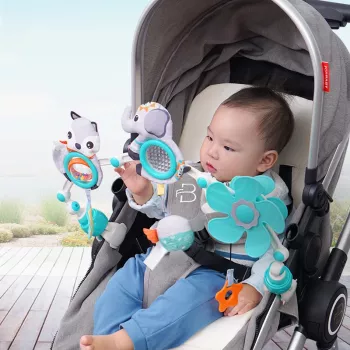
Safari Animal Hanging Rattle Toy for Stroller and Crib
A soft, hanging rattle toy can turn everyday moments—stroller walks, diaper changes, or quiet crib time—into simple sensory play. This safari-themed hanging toy is designed to encourage reaching, grasping, listening, and looking while staying easy to clip onto common baby gear.
What This Hanging Toy Adds to Daily Routines
Babies thrive on repeatable, comforting cues. A hanging rattle toy becomes a familiar “play signal” that can make transitions smoother—especially when routines happen in different places.
- Creates a familiar play cue during stroller rides, car-seat time (when attached to the handle area), and supervised crib play
- Encourages early cause-and-effect as baby bats or grabs and hears a rattle response
- Offers a lightweight activity option that travels easily without multiple loose parts
- Supports calmer transitions by giving baby something consistent to focus on in new environments
Sensory Play Benefits for Infants
Simple toys often do the most work because they invite repetition. That repetition supports early learning—especially when baby can see, touch, and hear the result of their movement.
- Hearing: rattle sounds help babies notice and track sound sources
- Sight: high-contrast areas and animal shapes can support visual attention and tracking
- Touch: soft textures invite exploration, squeezing, and finger movement
- Motor skills: reaching, grasping, and pulling build hand strength and coordination
- Attention building: a single hanging toy can hold focus longer than a flat toy during motion (like a stroll)
For a helpful reference point on what babies tend to practice over time, the CDC’s infant milestones overview is a practical guide for caregivers: CDC — Developmental Milestones (infants).
At-a-Glance Guide: Where to Use It and What to Watch For
Where you place a hanging rattle matters as much as the toy itself. Aim for a position baby can reach comfortably—without the toy bouncing into their face during movement.
Placement, best use, and safety checks
| Location | Best for | Placement tip | Safety check |
|---|---|---|---|
| Stroller | On-the-go engagement | Clip above chest level so baby reaches upward | Toy should not dangle at face level during bumps |
| Crib (awake only) | Short sensory breaks | Attach where baby can reach while lying on back | Remove before naps/bedtime; keep sleep area clear |
| Car seat handle (not straps) | Calm rides (when appropriate) | Clip to the handle area, not harness straps | Ensure it cannot interfere with buckles or tighten around baby |
| Play area | Tummy-time motivation | Hang slightly in front to encourage lifting head | Keep within safe reach; check stitching and attachment |
For broader toy safety considerations (including small-parts guidance), this resource is a solid starting point: CPSC — Toy Safety. For sleep spaces specifically, follow current guidance to keep the crib clear: American Academy of Pediatrics — Safe Sleep Recommendations.
Key Features to Look For in a Hanging Rattle Toy
A great hanging rattle is designed to be used daily—meaning it should attach reliably, feel gentle in small hands, and be simple to maintain.
- Secure clip or strap: stays put on stroller canopies and rails without slipping
- Soft, baby-friendly materials: comfortable for hands and gentle if bumped
- Easy-to-clean surface: wipes clean or spot-clean friendly for everyday use
- Simple design: fewer detachable pieces reduces the chance of lost parts
- Balanced stimulation: a pleasant rattle sound without being overly loud
Using It Well: Simple Play Ideas by Age Range
Hanging toys are most effective when they match what baby is working on right now. Short, repeatable play moments are often more satisfying than long sessions.
- 0–3 months (supervised): place the toy slightly to one side to encourage gentle head turning and visual tracking
- 3–6 months: encourage batting and grasping; pause after baby makes it rattle to reinforce cause-and-effect
- 6–12 months: play “reach and shake,” or name the safari animals to pair sounds with language exposure
- Keep sessions short: 3–10 minutes is often enough before baby needs a change of activity
Care, Cleaning, and Durability Checks
A hanging rattle toy tends to get handled frequently, dropped, and exposed to everyday messes. A quick routine keeps it fresh and helps catch wear early.
- Spot-clean with a mild baby-safe soap and damp cloth; allow to fully dry before reattaching
- Inspect weekly: look for loose stitching, frayed straps, cracked plastic parts, or weakened clips
- Rotate occasionally: alternating with another toy can keep interest high without overstimulation
- Replace if damaged: any loose parts or torn seams mean it’s time to retire the toy
Featured Picks (In Stock)
If you’re setting up a simple on-the-go play routine, these in-stock options are available now.
- Safari Animal Baby Stroller & Crib Hanging Rattle Toy – Sensory Play for Infants ($20.51)
- The Midday Energy Crash Mystery – Post-Meal Fatigue Guide, Digestion & Energy Balance eBook (Digital Download) ($7.99)
- EMS Eye Massager with LED Photon Therapy and Heating Vibration for Anti-Aging ($36.01)
Safari Animal Baby Stroller & Crib Hanging Rattle Toy
Shop the Safari Animal Baby Stroller & Crib Hanging Rattle Toy
FAQ
Is it safe to leave a hanging toy in the crib overnight?
No—hanging toys are best used during supervised, awake play. Remove the toy before naps and bedtime to keep the sleep space clear and aligned with safe-sleep guidance.
Where should a hanging rattle toy be attached on a stroller?
Clip it to the canopy or front bar where baby can reach it without it touching their face. Before moving, check that the attachment is secure and the toy won’t swing into baby during bumps.
How often should the toy be cleaned and inspected?
Spot-clean as needed and do a quick check before each use to confirm the clip is tight and seams look intact. Add a weekly inspection for wear like loose stitching, frayed straps, or weakened clips.










Leave a comment