Find Pest Eggs Fast: Decode Plant Damage & Stop Reinfestation
Plant Damage Doesn’t Have to Be a Mystery
Plant damage can look random until it’s approached like a quick investigation: confirm the pattern, find the culprit’s calling cards (including eggs), then choose a response that stops the life cycle. This checklist-style guide helps narrow down likely pests, spot egg clusters before they hatch, and prevent repeat outbreaks—without guesswork.
Start With the Plant Damage “Scene”: A 3-Minute Triage
- Confirm the timeline: Damage that appears overnight often points to active feeders; slow decline can indicate sap-suckers or root issues.
- Check the newest growth first: Many pests prefer tender leaves, buds, and fresh stems.
- Rule out look-alikes: Sunscald, low humidity, overwatering, fertilizer burn, and physical tearing can mimic pest symptoms.
- Look for patterns: Symmetrical yellowing across the whole plant suggests care issues; localized spots, stippling, holes, and deformities suggest pests.
- Quarantine suspicious plants immediately: Especially indoors, where airflow and close spacing help pests spread fast.
Where to Look for Pest Eggs (The Hotspots Most People Miss)
- Leaf undersides: Scan along veins and the midrib where eggs are shielded from light and some sprays.
- Petiole joints and leaf axils: Prime hiding zones for eggs, nymphs, and shed skins.
- New growth and buds: Eggs may be tucked into tight folds where damage begins later.
- Soil line and pot rim: Fungus gnat eggs/larvae are tied to consistently damp substrate; look for wet topsoil and algae.
- Stems, trellises, and nearby surfaces: Some pests lay eggs on supports or in the plant’s immediate environment.
Damage Clues That Point to Specific Culprits
Match what you see to where that pest hides. If the visual clue and the hiding spot agree, you’re usually close to the real cause.
- Stippling (tiny pale dots) + fine webbing: Frequently linked to spider mites; check undersides with bright light or a hand lens.
- Silvery streaks or scarring + tiny black specks: Often thrips; damage can distort new leaves or flowers.
- Sticky residue (honeydew) + sooty mold: Common with aphids, scale, or mealybugs; inspect stems and nodes.
- Chewed holes or ragged edges: Look for caterpillars, beetles, or (outdoors) slugs/snails; check at dusk/dawn.
- Leaf curl, stunting, misshapen growth: Often sap-suckers feeding on tender tissue; also consider virus risk when pests are present.
- Sudden leaf drop/collapse with no visible leaf pests: Inspect roots for rot and check for fungus gnat larvae in wet soil.
Plant Damage Detective Table: Symptom → Likely Pest → Where to Check → First Response
| Symptom | Likely pest | Eggs often found | Fast first response |
|---|---|---|---|
| Stippling, bronzing, fine webbing | Spider mites | Undersides near veins; webbed pockets | Rinse plant, increase humidity/airflow balance, isolate, repeat targeted treatment every 3–4 days |
| Silvery scarring, distorted new growth, black specks | Thrips | Inside buds, leaf folds, along midrib | Remove heavily damaged growth, isolate, treat on a schedule to interrupt life cycle |
| Sticky leaves, ants, sooty mold | Aphids / scale / mealybugs | Nodes, stems, underside clusters | Wipe/scrape pests, prune hotspots, treat and recheck weekly |
| Tiny flies around pot, seedlings failing | Fungus gnats | Top 1–2 inches of damp soil | Let soil surface dry, reduce algae, use physical barriers and targeted controls |
| Chewed holes, missing chunks, frass (droppings) | Caterpillars / beetles | Undersides, along stems, near feeding sites | Hand-pick, remove eggs, protect vulnerable plants and monitor at dusk |
Egg ID Basics: What Pest Eggs Commonly Look Like
- Clusters vs. singles: Many soft-bodied pests lay clusters; mites may be scattered; some insects insert eggs into tissue.
- Color shifts: Eggs can darken or turn translucent as hatching nears—catch them early when possible.
- Placement matters: Eggs often sit where runoff and sprays miss (creases, veins, buds, and tight junctions).
- Try a wipe test: Some egg masses smear or detach; others are cemented and need gentle scraping.
- Use magnification: A simple hand lens helps separate eggs, frass, shed skins, and mineral spots.
Containment and Cleanup: Stop the Spread Before Treating
- Isolate: Separate the plant and any neighbors that touch via shelves, leaves, or trellises.
- Remove the worst leaves first: Heavily damaged growth shelters eggs/nymphs and drains the plant’s energy.
- Rinse and wipe: A strong water spray (where safe) can dislodge pests and eggs; wipe stems and undersides.
- Sanitize tools and surfaces: Eggs can hitchhike on pruners, gloves, pots, and saucers.
- Refresh the soil surface if needed: Replace or clean the top layer if eggs/larvae are suspected near the surface, then avoid overwatering.
Prevention That Holds: Make Plants Harder Targets
- Stabilize care basics: Consistent light, appropriate watering, and good airflow reduce stress signals pests exploit.
- Inspect on a schedule: A 60-second underside scan weekly often catches eggs before hatch day.
- Quarantine new plants: Keep separate for 2–3 weeks and inspect multiple times before joining the collection.
- Avoid excess nitrogen: Overly soft growth can attract sap-suckers; use balanced feeding based on season and growth rate.
- Use physical barriers when relevant: Sticky cards for monitoring flying pests; top-dressings or pot covers to discourage soil egg-laying.
Printable Checklist: Spot, Confirm, Act, Recheck
Use the Full Detective Checklist for Faster, Clearer Decisions
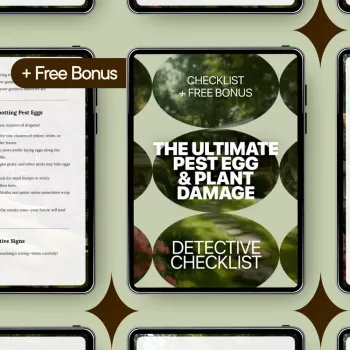
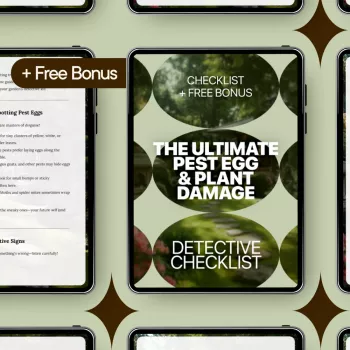
For a ready-to-follow version you can use plant-by-plant, keep The Ultimate Pest Egg & Plant Damage Detective Checklist on hand. It’s designed for quick inspections that reduce missed egg hotspots and help connect damage patterns to the most likely culprits—useful for both indoor houseplants and outdoor container plants.
More digital downloads
Trusted references for pest ID and management
- University of California Agriculture and Natural Resources (UC IPM) – Plant Pest Management Guidance
- Royal Horticultural Society (RHS) – Common Houseplant Pests
FAQ
What is the hardest indoor plant pest to get rid of?
Thrips and spider mites are often the most persistent because they reproduce quickly, hide in tight new growth or leaf undersides, and require repeat treatments timed to the life cycle. Mealybugs and scale can also be stubborn because they shelter in crevices and have protective, waxy coatings.










Leave a comment