Used Sports Helmet Safety: What to Check Before Buying
How can I tell if a used sports helmet is still safe to use?
Start with the basics: age, history, and certification
Before inspecting the shell, find the manufacturing date and confirm the helmet still meets the sport’s current safety standard (look for labels like CPSC, ASTM, NOCSAE, or similar). If the seller can’t confirm whether it was ever in a crash or hard impact, treat it as compromised and skip it—many helmet liners are designed for one significant hit.
Inspect the outer shell for structural damage
Check the shell under bright light. Walk away if you see cracks, spiderweb lines, soft spots, bubbling, or areas that look warped or sun-baked. Pay close attention around vents, edges, and mounting points, where stress damage often shows up first. Cosmetic scuffs are common, but any fracture-like line is a no-go.
Check the liner and padding for compression or deterioration
Look inside for crushed foam, dents, gaps between the liner and shell, or sections that feel brittle. If the padding is permanently flattened, flaking, or smells strongly of mildew, the helmet may not fit or protect correctly. On MIPS or similar slip-plane systems, confirm the layer moves as intended and isn’t torn or detached.
Test the fit system and straps like you’re about to ride
Buckles should click securely, straps shouldn’t fray, and the chin strap anchors shouldn’t pull loose. Adjusters should tighten evenly without slipping. If the helmet shifts easily when you shake your head or it can’t sit level and snug, it’s not safe—even if it “looks fine.”
When to replace immediately
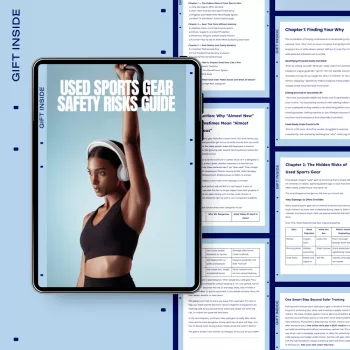
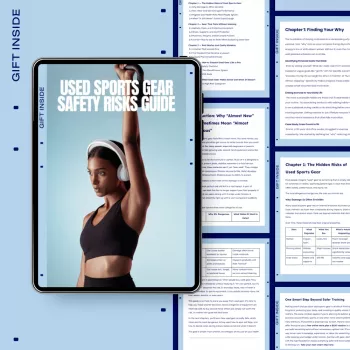
Replace a used helmet if it’s beyond the manufacturer’s recommended lifespan, shows any cracking or crushed foam, has missing parts, or has an unknown impact history. For a broader used-gear inspection checklist, see this used sports gear safety guide.
FAQ
What are the biggest red flags when buying used protective sports gear?
Skip items with cracks, deep deformation, missing labels or parts, heavy odor/mildew, or any sign the material is brittle or delaminating. If the seller can’t share the item’s age and impact history, consider it a high-risk purchase.







Leave a comment